Organic traffic up four times in under three months, with 436 route pages

How 436 Route Pages Quadrupled Topship's Organic Traffic in Three Months

In 2022, Topship shipped parcels from Nigeria to 189 countries. Yet people searching for those exact routes couldn’t find it.

Here’s how we built a page for every route, and what it did for organic traffic and sign-ups.

CLIENT:

Topship

CATEGORY:

Programmatic SEO & Growth

Topship logo

Growth Problem

How do you make a shipping startup visible to the people already searching for the exact routes it serves?

MY ROLE

Lead consultant at Zaicon Digital. I owned the SEO strategy, page architecture, conversion work, app store optimisation, and analytics.

WHAT I BUILT

I designed and launched a network of 436 programmatic route pages, then rebuilt the conversion journey, app store presence and tracking behind them.

4x

Organic traffic, in under three months

436

Route landing pages built and launched

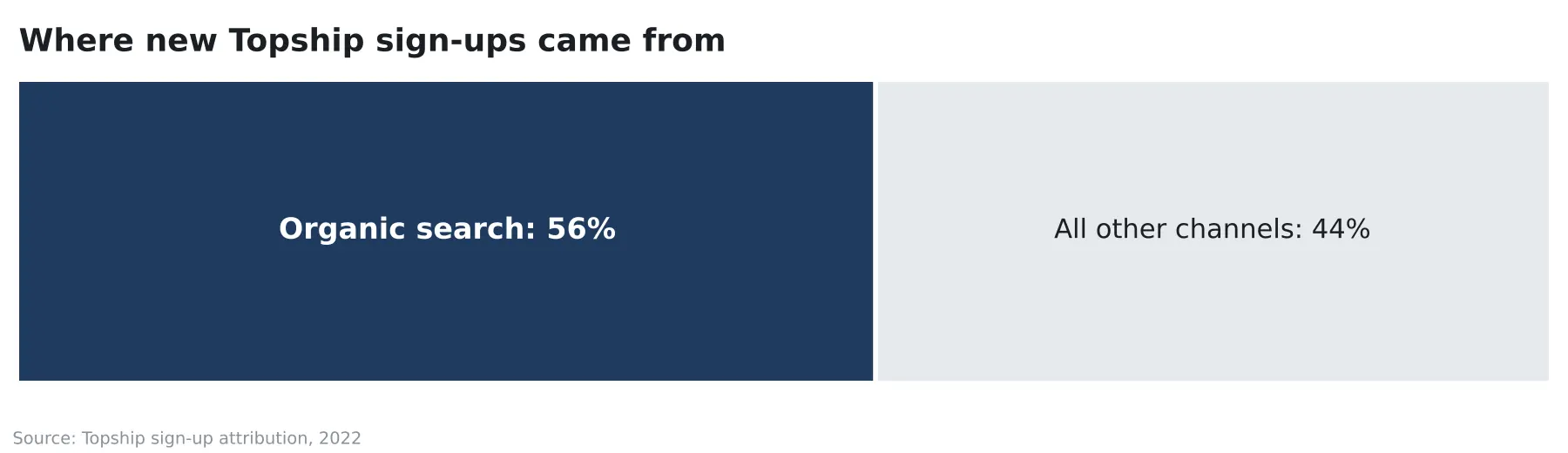
56%

Of new sign-ups from organic search

Skills applied

Programmatic SEO

Technical SEO

Conversion Rate Optimisation

App Store Optimisation

Lifecycle Marketing

Analytics & Tracking

Frameworks

Programmatic SEO

Hub and Spoke Model

AAARRR Funnel

Topship share of new sign-ups by channel, with organic search at 56%
Share of new Topship sign-ups by channel, 2022.

The problem

Topship had a strong product and fair prices. But its website barely showed up in search.

Most new customers came through paid ads. In a crowded market, that’s an expensive way to grow.

Meanwhile, people searched for exact routes every day. Think “shipping from Lagos to Abuja” or “delivery from Nigeria to UK”. Topship served those routes but had no page for them.

The numbers

Beyond the headline results, the page network delivered:

  • 189 countries covered by international route pages
  • 90+ mobile PageSpeed score across the page network
  • Thousands of transactional keywords ranking on page one

Organic search went from a minor channel to the biggest source of new sign-ups. Over the same period, Topship kept breaking its monthly delivery record. Pages ranked on page one for searches like “shipping from Lagos to Abuja”, “delivery from Nigeria to UK”, and “express delivery Lagos”.

One page for every route people search for

We started with search demand, not a content calendar. We listed every route Topship served, then checked how people searched for each.

The pattern was clear. People search by where a parcel starts and where it’s going. So we built a page for each pair.

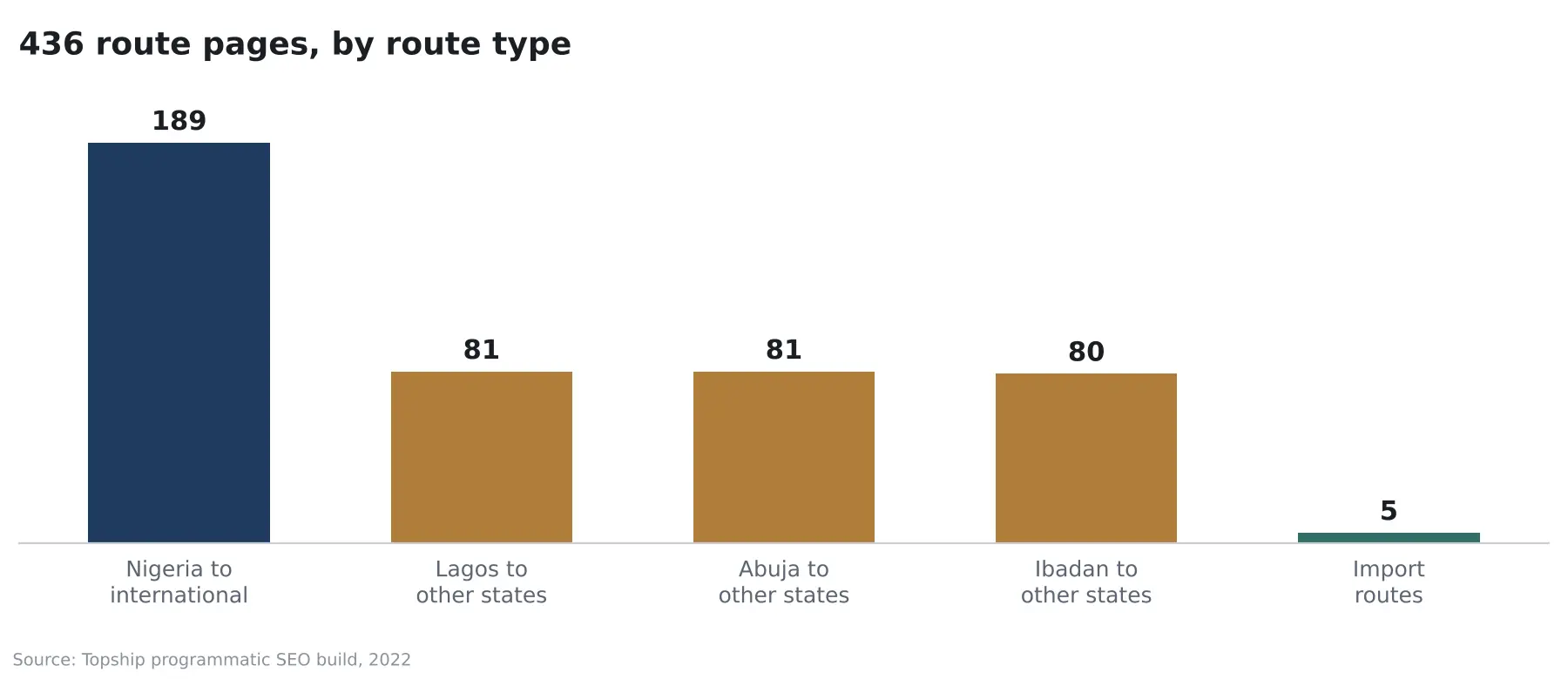
  • Nigeria to international: 189 pages, one per country, such as “International shipping from Nigeria to United Kingdom”.
  • Lagos to other states: 81 pages covering every state and major city.
  • Abuja to other states: 81 pages.
  • Ibadan to other states: 80 pages.
  • Import routes: five pages for reverse routes, like “Ship from UK to Nigeria”.

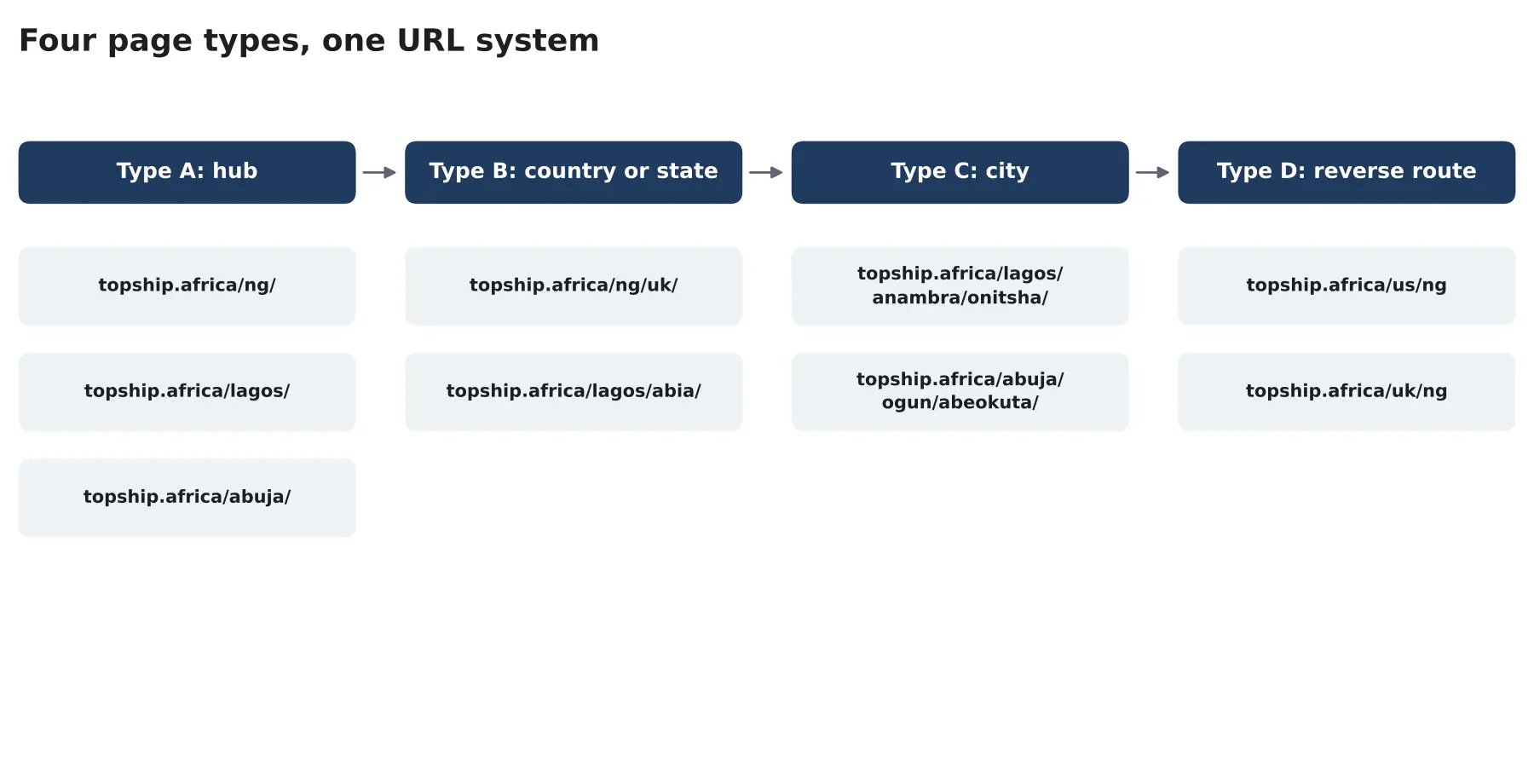
A four-level URL system

Each page type had its own place in the site. That kept URLs readable and internal links logical.

  • Hub pages: topship.africa/ng/, topship.africa/lagos/, and topship.africa/abuja/.
  • Country and state pages: topship.africa/ng/uk/ and topship.africa/lagos/abia/.
  • City pages: topship.africa/lagos/anambra/onitsha/ and topship.africa/abuja/ogun/abeokuta/.
  • Reverse routes: topship.africa/us/ng and topship.africa/uk/ng.
Topship programmatic SEO URL structure across four page types
The four page types and how their URLs nest.

A quality floor for every page

Programmatic pages often fail because they’re thin. So we set rules every page had to meet before it went live.

  • Clear titles. Each title stayed under 55 characters and named the route.
  • Real content. Every page carried over 800 words of practical copy.
  • Clean structure. One H1 per page, with H2 and H3 headings below it.
  • Speed. A mobile-first build scoring over 90 on PageSpeed.
  • Linking. Internal links between related routes and their hubs, plus canonical tags and schema markup.

Turning visitors into shippers

Traffic was only half the job. We also reworked the journey from first visit to first shipment.

On the homepage, we built two hero sections for different customer types. We added app reviews and social proof, plus app prompts below the hero and above the footer.

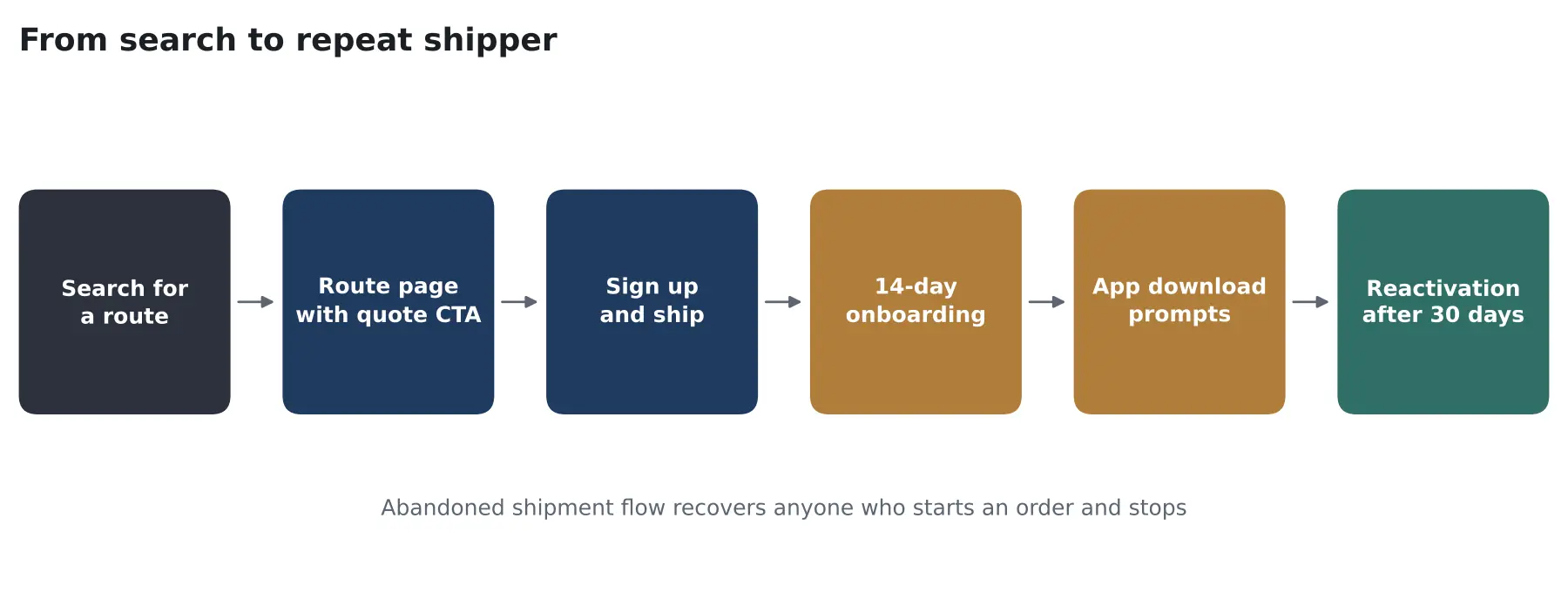
After sign-up, a 14-day onboarding flow taught new users how to ship. An abandoned shipment flow brought back people who started an order and stopped. Anyone inactive for 30 days or more got a reactivation campaign.

Topship journey from route search to repeat shipper
The path from a route search to a repeat shipper.

Moving customers onto the app

Topship had just launched its mobile app. We wanted web customers to move across.

The order confirmation page, the welcome email, and every transactional email carried an app download prompt with social proof.

In the app stores, we optimised the title and description for terms like “shipping”, “delivery”, “logistics”, and “interstate delivery”. We improved the icon and screenshots, and asked for a review after each successful delivery. A dedicated landing page showed off the app’s features.

Measuring everything

You can’t improve what you can’t see. So we rebuilt Topship’s tracking across web and app.

GA4 and Google Tag Manager went across topship.africa, ship.topship.africa, and blog.topship.africa. We tracked sign-ups, quotes, and completed orders as conversions.

The apps got Firebase, their own GA4 property, the Facebook SDK, and OneSignal for push messages. Mixpanel and session recordings showed where users dropped off.

Making paid spend work harder

While organic grew, we cut waste in paid media.

On Google Ads, we linked GA4 for conversions and audiences, ran app install campaigns, and excluded existing customers. On Meta, we made separate creative for new customers and for moving existing ones to the app. Retargeting followed site visitors and anyone who abandoned a shipment.

What I learnt

  • Build pages for how people search. Customers searched by route, so we built by route.
  • Set a quality floor. Rules on length, structure, speed, and linking stopped 436 pages from becoming thin content.
  • Give traffic a path to revenue. Every page, email, and confirmation screen pointed to the next step.
  • Fix tracking early. Clean data across web and app showed which pages and campaigns earned their keep.
  • Let organic carry the load. Once search drove over half of sign-ups, paid could focus on what it does best.

Topship 436 route pages grouped by route type
The finished network: 436 route pages, grouped by route type.

Your demand may be hiding in plain sight.

Topship’s demand was hiding in thousands of route searches. Most businesses with many locations, routes, or products have the same gap. Want to find yours? Get in touch, and let’s map your demand together.

More case studies