Moving customers onto the app
Topship had just launched its mobile app. We wanted web customers to move across.
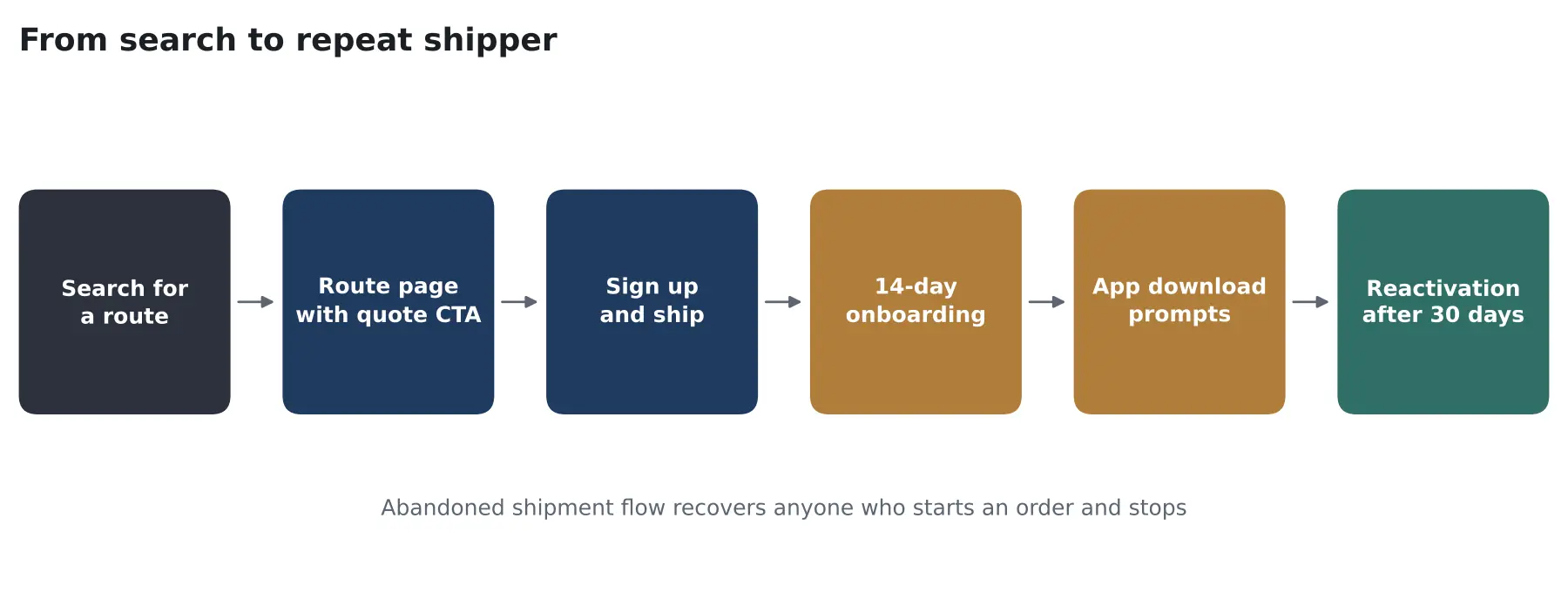
The order confirmation page, the welcome email, and every transactional email carried an app download prompt with social proof.
In the app stores, we optimised the title and description for terms like “shipping”, “delivery”, “logistics”, and “interstate delivery”. We improved the icon and screenshots, and asked for a review after each successful delivery. A dedicated landing page showed off the app’s features.
Measuring everything
You can’t improve what you can’t see. So we rebuilt Topship’s tracking across web and app.
GA4 and Google Tag Manager went across topship.africa, ship.topship.africa, and blog.topship.africa. We tracked sign-ups, quotes, and completed orders as conversions.
The apps got Firebase, their own GA4 property, the Facebook SDK, and OneSignal for push messages. Mixpanel and session recordings showed where users dropped off.
Making paid spend work harder
While organic grew, we cut waste in paid media.
On Google Ads, we linked GA4 for conversions and audiences, ran app install campaigns, and excluded existing customers. On Meta, we made separate creative for new customers and for moving existing ones to the app. Retargeting followed site visitors and anyone who abandoned a shipment.
What I learnt
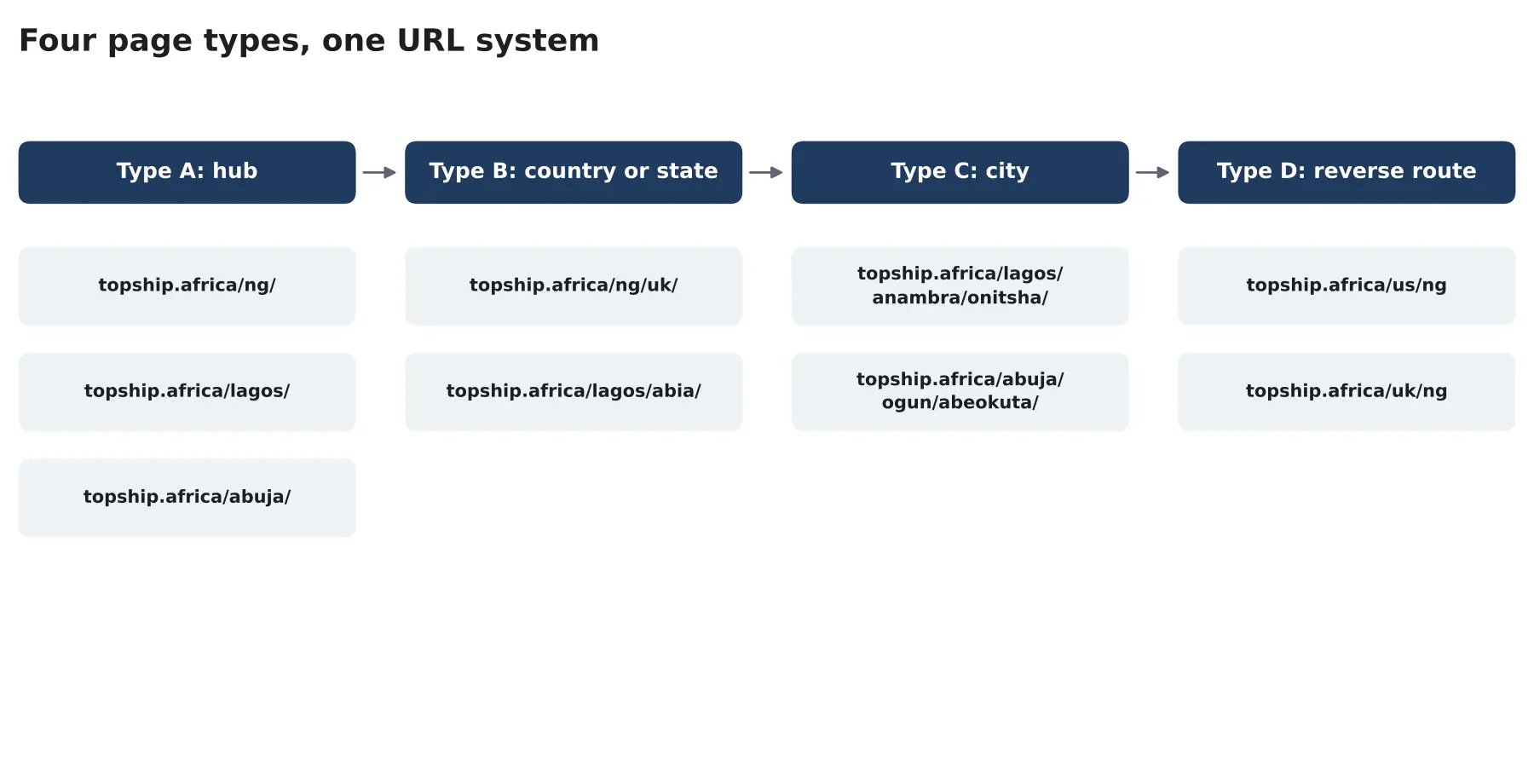
- Build pages for how people search. Customers searched by route, so we built by route.
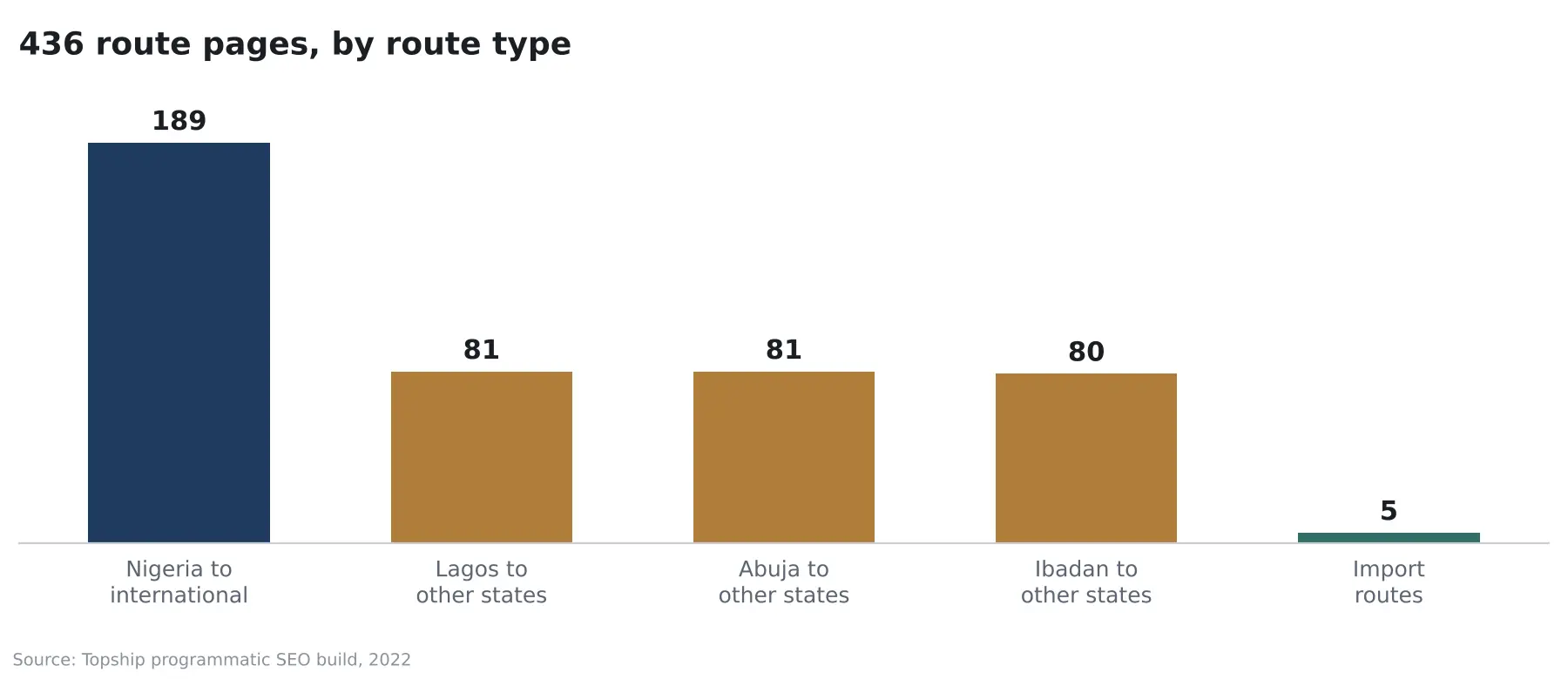
- Set a quality floor. Rules on length, structure, speed, and linking stopped 436 pages from becoming thin content.
- Give traffic a path to revenue. Every page, email, and confirmation screen pointed to the next step.
- Fix tracking early. Clean data across web and app showed which pages and campaigns earned their keep.
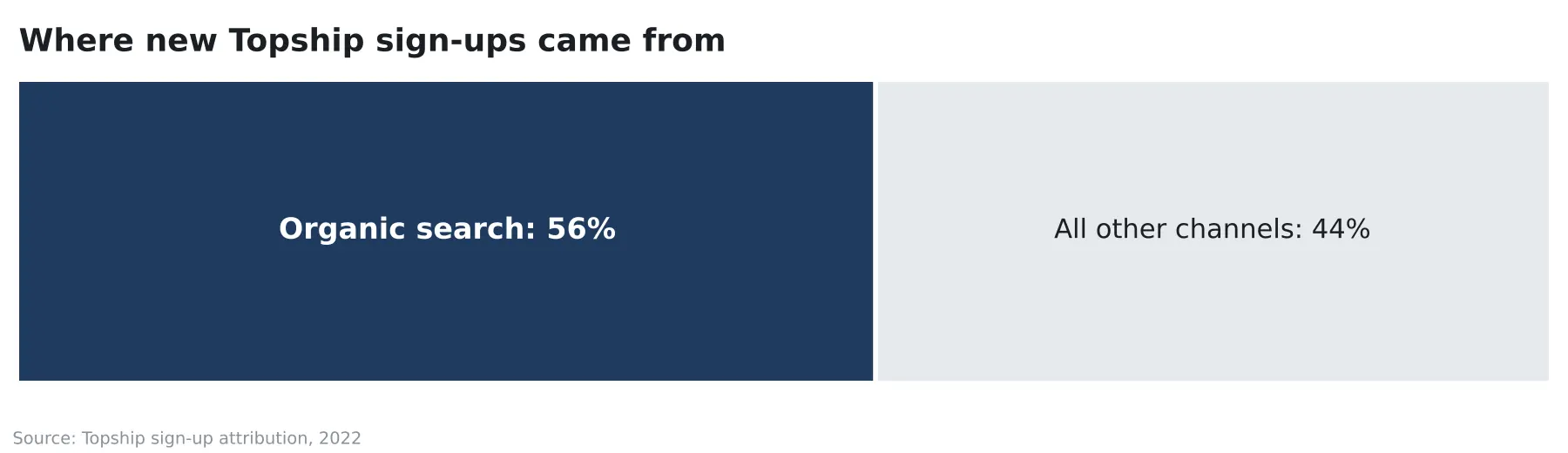
- Let organic carry the load. Once search drove over half of sign-ups, paid could focus on what it does best.


 Latest articleFree Blog Content Brief Template (and How to Fill It In) A free, white-labelled blog content brief template for SEO articles, with a section-by-section guide to keywords, intent, structure, links, schema and a… Read all articles