Your PR team lands a feature in a major publication. Everyone shares it on LinkedIn. Three months later, someone in SEO finds the article by accident. The link points to the homepage, the anchor says “here”, it sits in the author bio, and nobody logged it anywhere.
That is how most companies run PR and SEO: two teams chasing the same thing, links and mentions from trusted sites, without a shared list, a shared brief or a shared tracker. The coverage is real. The search value is mostly wasted.
It matters more now than it did two years ago, because AI assistants lean on press coverage more than almost anything else. In this guide I’ll show you why PR has become an SEO and AI visibility channel, and the eight steps I use to make every placement count. There’s a free placement tracker to go with it.
Quick answer: To align PR and SEO, give PR a short list of the pages that most need authority, agree the target URL, anchor text and link type for every placement, and track each one in a shared sheet. Point coverage at product, market and research pages instead of the homepage, and review the results together every month.
Why PR is now an SEO and AI visibility channel
Links from respected publications have always helped rankings. What has changed is AI search.
Muck Rack’s May 2026 study of more than 25 million links cited by ChatGPT, Claude and Gemini found that 84% came from earned media: journalism, research, government and other third-party sources. Paid and advertorial content made up 0.3%. Journalism alone was about 27% of everything cited.
The type of question matters too. Muck Rack found that questions about what is happening in an industry pull heavily on news coverage, while “how do I” questions lean on reference content and brand-owned pages. Your help centre wins the second kind. Your PR wins the first.
The uncomfortable number
Muck Rack also found only a 2% overlap between the journalists PR teams pitch most and the journalists AI models actually cite for those brands. Most PR plans are aimed at the wrong bylines for AI visibility.

Why PR and SEO drift apart
- Different goals. PR measures reach and share of voice. SEO measures links, rankings and traffic.
- Different timing. PR moves at the speed of the news. SEO plans in quarters.
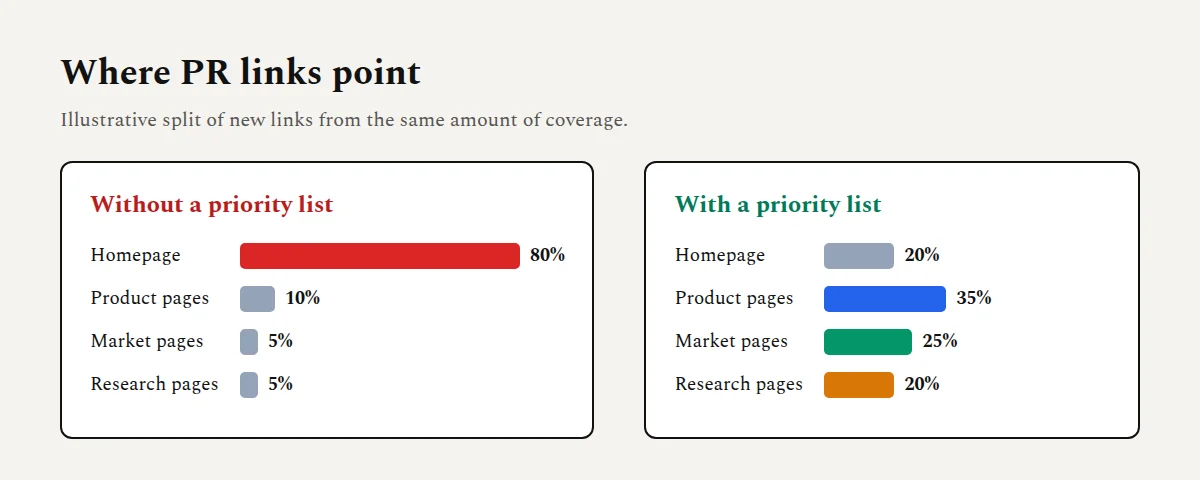
- No shared brief. PR doesn’t know which pages SEO is trying to rank, so links default to the homepage.
None of this needs a reorganisation. It needs a shared list, a short checklist and a monthly conversation.
Step 1: Give PR a priority URL list
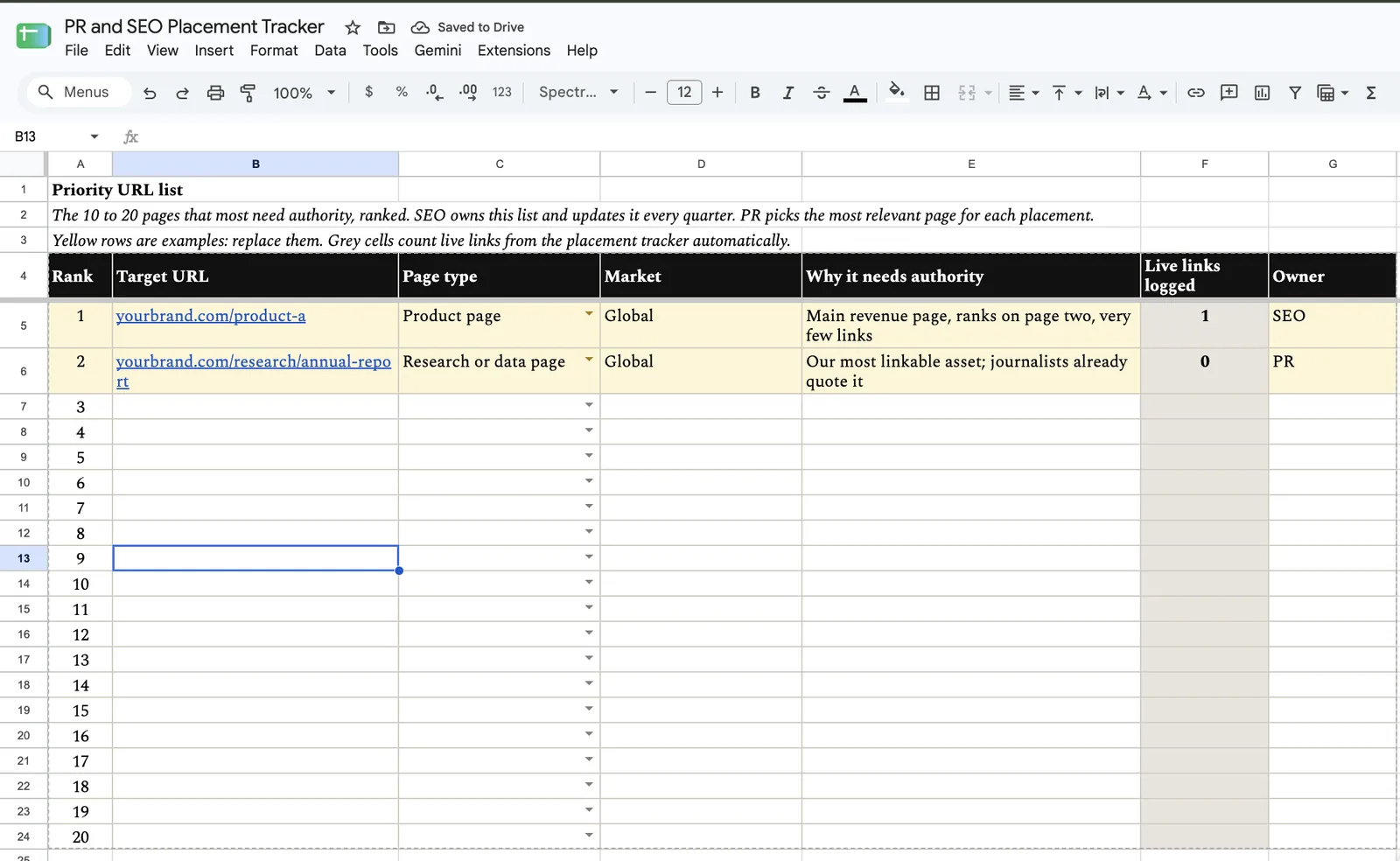
SEO should keep a short list of the pages that most need authority and share it with PR. For most brands, that includes core product pages, high-value commercial pages, market or location pages, localised homepages and your strongest research or data pages.
Keep it to 10 to 20 URLs, ranked, and update it every quarter. When PR secures a placement, they pick the most relevant page from the list instead of defaulting to the homepage. The homepage is usually your strongest page already. It is the product and market pages that need the help.
Step 2: Agree an SEO checklist for every placement
This isn’t about making PR’s job harder. It is about getting full value from coverage PR has already worked hard to win. For each placement, agree:
| Item | What to decide |
|---|---|
| Target URL | The most relevant page from the priority list |
| Anchor text | Natural and descriptive: the product or topic, not “click here”. Avoid repeating exact-match anchors across many placements |
| Earned or paid | Paid and sponsored links must carry rel=”sponsored”. Earned links should be followed where possible |
| Link position | In the body of the article, not only in an author bio or footer |
| Referring domain | Is the site relevant? Has it linked to you before? |
| Tracking | Log the URL, date, target page and link type in a shared tracker |
The paid-link rule isn’t optional. Google’s guidance on qualifying outbound links asks for rel=”sponsored” on links that were paid for, including sponsorships and advertorials. The tracker template flags any paid placement that isn’t marked as sponsored.
Step 3: Prioritise net-new referring domains
A link from a site that has never linked to you is worth more than another link from a site that already has. Net-new referring domains widen and strengthen your link profile.
This matters most around big moments: product launches, funding news, research releases and event sponsorships. Aim PR effort at publications in your space that have never covered you, partner and event pages, and relevant industry sites. And spread the targets across pages. A sponsorship that produces 30 links, all pointing to the homepage, is a missed opportunity.
Step 4: Turn unlinked mentions into links
Every month, search for mentions of your brand without a link. Many journalists will add one if you ask politely and quickly, especially when the link helps their readers. Point the request at the most relevant page, not the homepage.
Unlinked mentions still matter for AI search, because assistants learn and retrieve brand associations from text, link or no link. But a link is still better for classic SEO, so ask.
Step 5: Localise your trust signals
Many brands show the same “As seen in” logos in every market. A reader in Brazil may not recognise a British publication, and a reader in Kenya may not recognise an American one. Trust signals work best when they come from sources the reader knows.
- Group markets by language. One set of publications can serve several markets that share a language.
- Map publications per market. List the leading general news, technology and finance titles for each.
- Mark existing coverage and realistic targets. That gives PR a clear target list.
- Feed new wins back into the site. When PR lands coverage in a market, add it to that market’s “As seen in” section.
My notes on international link building go deeper on running PR across markets.
Step 6: Refresh the press page
Your press page does two jobs: it ranks for brand and press searches, and it gives journalists what they need. Most press pages are badly out of date. Keep these current:
- Coverage, newest first
- Recent milestones and figures
- A media kit with logos, product images and founder photos
- Company boilerplate
- A named press contact
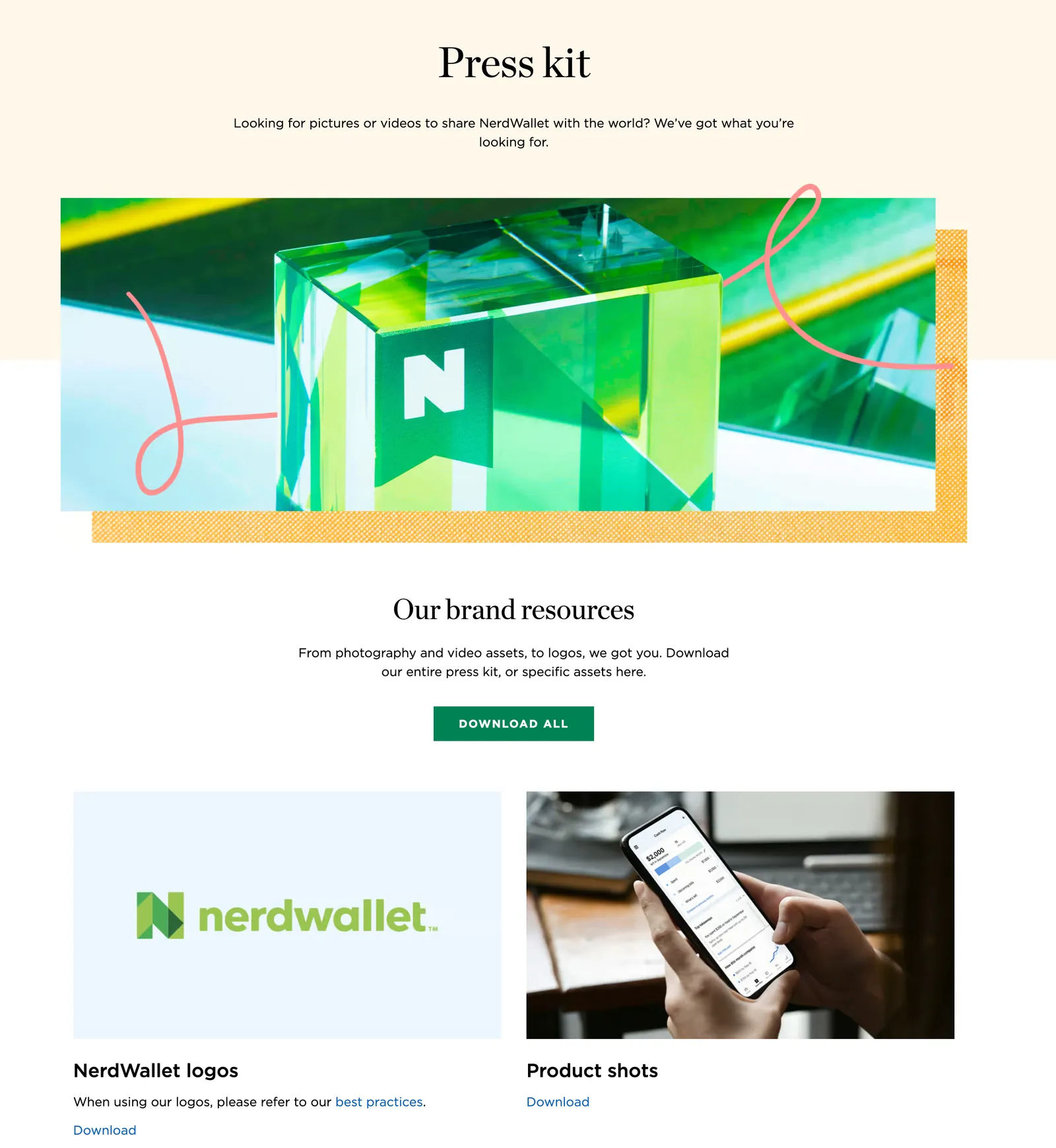
NerdWallet’s press kit is a good model: one “download all” button, then logos with usage guidance, product shots, leadership headshots, office photos, B-roll and a named press email.
Then link from the press page to your main product pages. Journalists copy from it, so every fact on it should match your official sources.
Step 7: Make PR part of your AI visibility plan
When someone asks an AI assistant for the best tool in your category, the answer leans heavily on third-party sources: news coverage, “best of” roundups, comparisons and alternatives articles. If you are named there, you get surfaced. If you aren’t, you are invisible in that channel.
I covered why a brand’s own self-ranking list rarely wins the recommendation in self-promotional listicles. Third-party coverage is the part that does. So set a target for each product: for example, at least 10 reputable third-party pages that mention it, in the formats AI tends to retrieve, in every language and market you serve.
Give journalists facts they can check
If a journalist gets your fees or features wrong, AI may repeat the mistake for months. Send a short fact sheet with every pitch, and link it to your help centre articles so the official answer is easy to verify.
Step 8: Keep your boilerplate consistent
Your company description, founding facts, leadership and regulatory wording should be identical across press releases, the press page, directories and registries. Keep one master record and update everywhere at once. Inconsistent facts confuse search engines and AI assistants about who you are.
How to measure PR and SEO alignment
Track five numbers, and review them in a 30-minute PR and SEO sync each month:
- The share of new links pointing to priority pages, not the homepage
- Net-new referring domains per month
- Third-party mentions per product
- AI mentions and citations per product
- Branded search volume around campaigns and launches
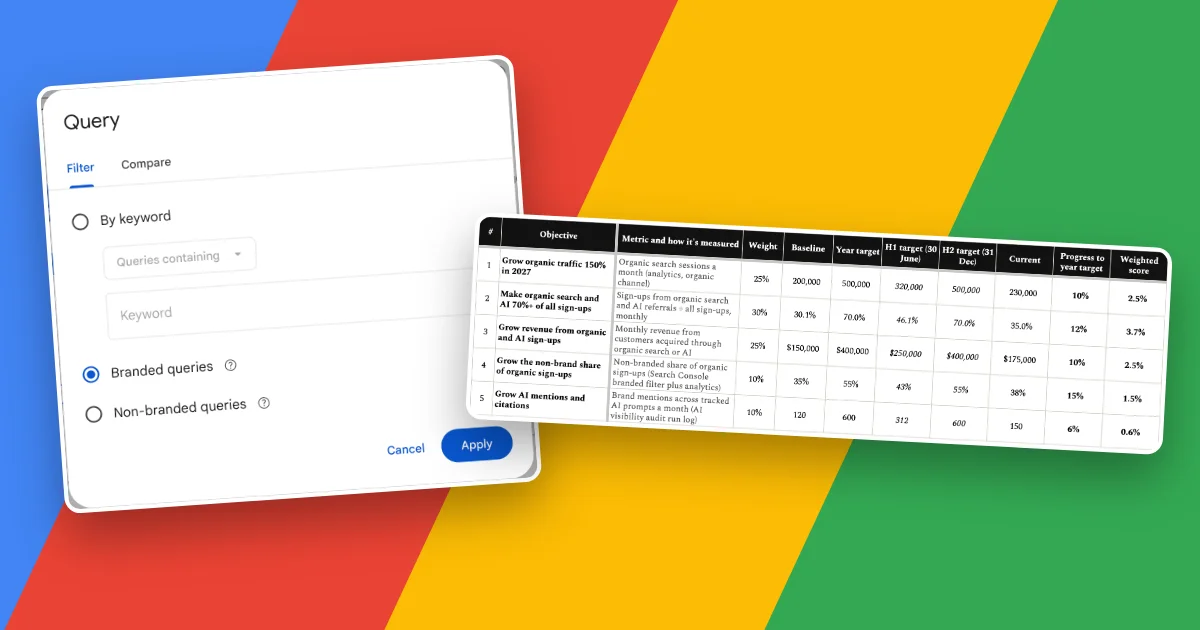
The tracker’s monthly summary tab calculates the first two for you, along with unlinked mentions to chase and any paid links missing rel=”sponsored”. For AI mentions and citations, use the prompt run log in my AI visibility audit template.
“PR earns the coverage. SEO makes sure it keeps working after the news cycle ends.”
Afeez Adebayo
Get the free PR and SEO placement tracker
A priority URL list, a placement tracker and a monthly summary that calculates itself.
If you want a hand bringing your PR and SEO teams together, get in touch. You can also use my digital PR Skill.md with Claude or Codex.